
The Short Answer
If your opener is under about eight years old and the problem is a single failed part — a sensor, a circuit board, a worn drive gear — repair is almost always the cheaper move. If the unit is past ten years old, you've already paid for two or more repairs in the last couple of years, or the motor strains and groans before it ever lifts the door, replacement is usually the better deal once you look at a five-year window instead of just today's invoice. For a typical home around here, heading into another hot, dusty summer and a wet winter after it, that five-year view matters more than the sticker price in front of you right now.
Why the Math Isn't Obvious at First Glance
A repair bill always looks smaller than a replacement bill, so it's tempting to always choose the cheaper number in the moment. But openers are mechanical and electronic systems with a limited lifespan — most chain, belt, and screw-drive units are built to last somewhere in the 10 to 15 year range under normal use. A single repair (sensor realignment, circuit board swap, gear replacement) commonly falls in the $100–$250 range nationally. A full opener replacement, installed, typically runs $350–$700 depending on drive type and horsepower. The question isn't which number is smaller today — it's how many more repair bills that older unit is likely to generate before it fails for good.
What Repair Usually Fixes
- Dead or misaligned safety sensors (common after a bump from a parked car or ladder)
- A failed circuit board or logic board while the motor itself still runs fine
- A stripped or worn drive gear on an otherwise healthy chain-drive unit
- A remote or keypad that's stopped syncing, when the motor and rail are sound
- A noisy but functional motor that just needs lubrication and a tune-up
What Replacement Buys You
- A new warranty covering the whole unit, not just one swapped part
- Quieter belt-drive options, which matter if the garage sits under or next to a bedroom
- Battery backup, now standard on many models, so the door still opens during a winter storm outage
- Rolling-code security and smartphone connectivity that older units don't support
- Better horsepower matching for heavier insulated or retrofit-reinforced doors
The Five-Year Math
Picture a 12-year-old chain-drive opener that needs a $180 circuit board today. On its own, that looks like the obvious choice. But a unit that age has usually already absorbed a decade of temperature swings, dust, and daily cycling — the motor bearings, drive gear, and wiring insulation are all further along in their wear curve than the board that just failed. It's common for a unit in that condition to need another repair within a year or two: a sensor, a gear, a capacitor. Two more $150–$200 repairs over five years puts you close to, or past, the cost of a new opener — one that also comes with a warranty and a few features the old one never had. A five-year-old opener with the same $180 board failure is a different story: the rest of the unit is still well within its expected life, so that single repair is genuinely the cheaper path.
The rule of thumb worth remembering: repair when the rest of the unit is young and healthy; replace when the failure is just the latest symptom of a system that's aging out.
What Roseville's Climate Does to an Opener
Local conditions shorten or extend that lifespan more than most homeowners expect. Hot inland summers put real thermal stress on motor housings and plastic gears, especially in detached or poorly ventilated garages that trap heat. Dry seasons bring dust and, in bad years, wildfire smoke residue that settles on photo-eye sensor lenses and circuit boards, which is a common cause of a door that reverses for no obvious reason. Winter rain adds humidity swings that can corrode electrical contacts and swell wood door panels, throwing off the balance an opener has to work against. And homes that have gone through earthquake retrofits sometimes have garage doors that were reframed or reinforced, which can change the weight and balance the opener is lifting — worth factoring in if you're choosing a replacement unit's horsepower.
None of this means an opener needs constant intervention, but it does mean a unit here is doing more work than the same model would in a milder, drier climate. That's one more reason an aging opener with a fresh failure is a better candidate for replacement than the same failure on a younger unit.
When to Call Roseville Garage Door Pro
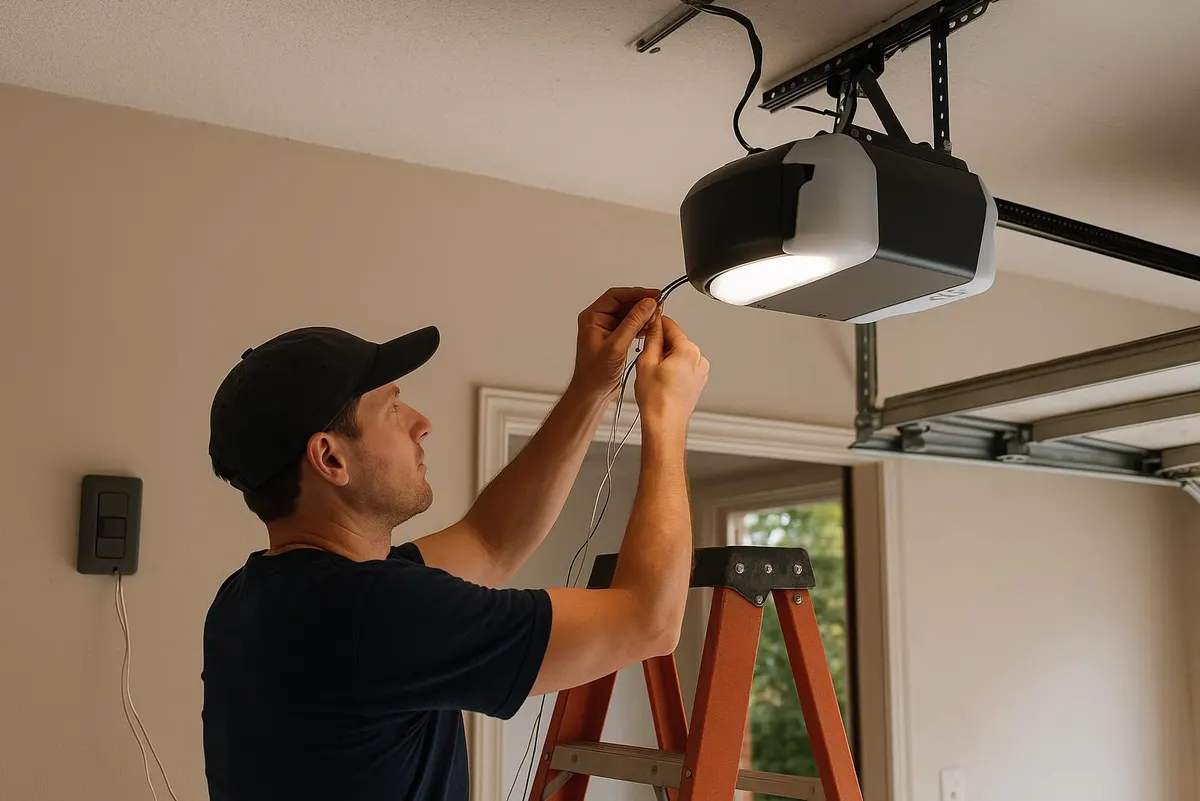
If you're not sure which side of that line your opener falls on, that's exactly the call to make before buying either a part or a new unit. We'll check the motor, gears, and wiring, not just the symptom you called about, and give you a straight answer on whether repair makes sense or whether you're better off putting that money toward Garage Door Opener Repair & Installation. If your opener is part of a bigger pattern — a door that's also sagging, noisy, or slow — we'll fold in Preventive Maintenance so the new or repaired opener isn't fighting a door that needs its own attention. And if the opener fails completely and the door won't budge, our Emergency Garage Door Service gets someone out fast rather than leaving your car stuck or your home exposed.
If your opener is acting up anywhere from Roseville to Rocklin, Granite Bay, Citrus Heights, Folsom, Lincoln, Loomis, or Antelope, call Roseville Garage Door Pro for a straight assessment and a fix that actually fits your home.