
The Mistake Almost Everyone Makes First
As soon as the first cool, damp mornings roll in, most homeowners reach for a can of WD-40 and spray down every moving part of the garage door. It feels productive. The can is already sitting on a shelf in the garage, it takes two minutes, and the door usually sounds quieter right afterward. That quick win is exactly why it's so tempting.
The problem is that WD-40 is a solvent and light rust penetrant, not a lubricant. It strips away whatever grease is already on the hinges, rollers, and springs, then evaporates. Within a few weeks, those parts are drier than before you started. Worse, in a region that goes from dry, dusty summer conditions straight into wet winter weather, that thin solvent film actually attracts dust and grit, which then gets ground into the hinges and track every time the door opens. By January you end up with squeaky, gritty hardware that wears faster, not slower.
What Real Pre-Winter Maintenance Looks Like
1. Use the right lubricant, in the right places
Swap the WD-40 habit for a silicone-based garage door lubricant or white lithium grease. Apply it to the hinges, roller stems (not the nylon rollers themselves), the torsion spring, and the lift cables' contact points. A light coat is enough — you're not trying to coat the whole door, just the pivot points that take the most friction.
2. Check the weatherstripping before the rain arrives
After a long dry season, rubber seals around the garage door often shrink, crack, or pull away from the frame. The bottom seal and the vinyl stripping along the sides and top are what keep wind-driven winter rain, dust, and drafts out of the garage. Run your hand along the bottom seal — if it's stiff, cracked, or has gaps you can see daylight through, it needs replacing before the wet season sets in. This is a simple, inexpensive fix that prevents water pooling at the base of the door and seeping toward stored belongings or a finished garage floor.
3. Test the auto-reverse and safety sensors
Cold, damp mornings can cause condensation to form on the photo-eye sensors near the bottom of the track, which sometimes makes the door refuse to close or reverse unexpectedly. Wipe the sensor lenses clean, make sure they're still aligned (the indicator lights should be solid, not blinking), and run the classic test: place a block of wood on the ground where the door closes — it should reverse on contact. If it doesn't, that's a safety issue worth addressing immediately, not something to put off.
4. Inspect the springs before cold weather stresses them
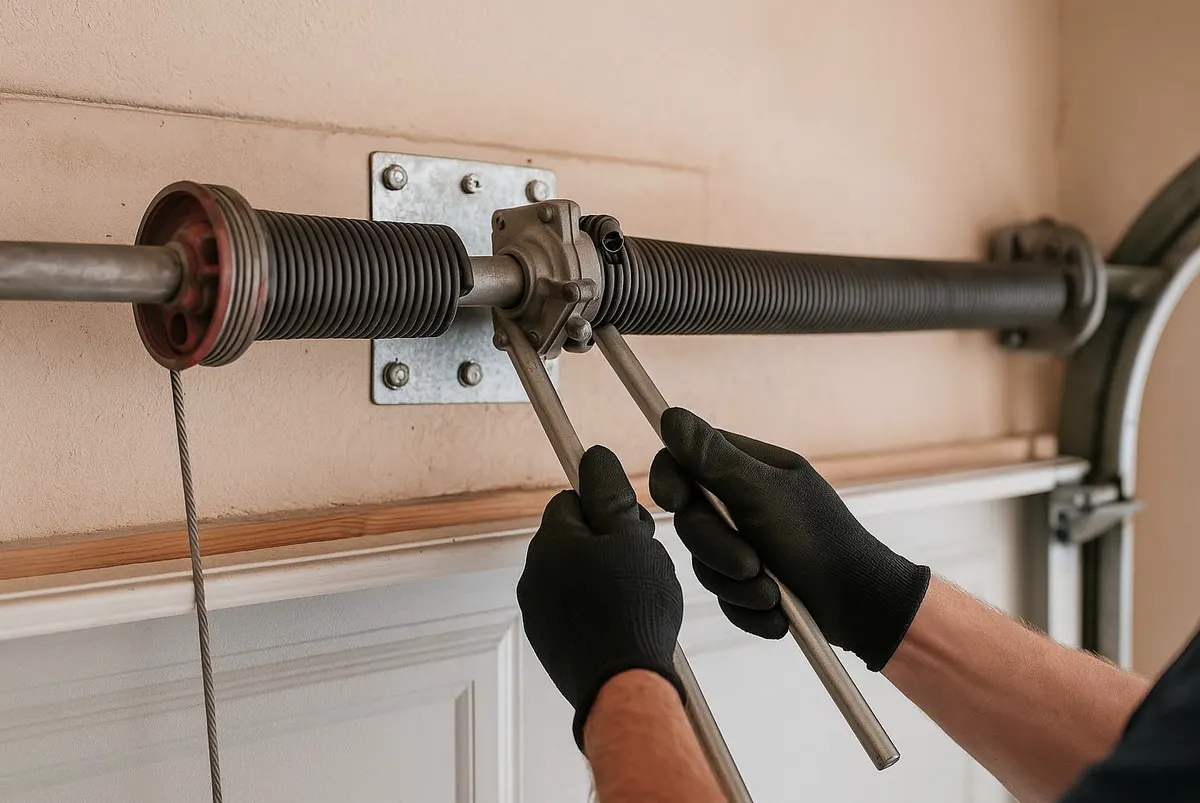
Torsion springs lose some flexibility in colder temperatures, and a spring that's already worn from a summer of heavy use is more likely to fail on a cold morning than a mild one. Look for visible gaps in the coils, rust, or a door that feels heavier than usual when lifted manually with the opener disconnected. Springs are under high tension and are not a DIY repair — if yours looks worn, get it inspected before it snaps, which almost always happens at the least convenient moment.
5. Clear dust and debris out of the tracks
Dry-season dust and, in some years, residual wildfire smoke residue can settle into the tracks and rollers over the summer and fall. Wipe the tracks down with a damp cloth and check that they're still straight and free of dents. Debris in the tracks combined with winter moisture can turn into a grimy paste that makes the door bind or run unevenly.
6. Confirm your opener has backup power, or get one
Winter storms bring a higher chance of power outages. If your opener doesn't have a battery backup, consider adding one, especially if the garage is your main entry point or if you rely on it for a vehicle you'd need in an emergency. It's worth testing an existing battery backup now rather than discovering it's dead during a storm.
7. Check bracing if your home has had seismic retrofit work
If your garage has been reinforced for earthquake retrofitting, take a look at the added bracing, struts, and anchor bolts while you're already inspecting the door. Settling, corrosion, or loose hardware can develop over time, and a door that's out of alignment with its reinforced framing won't operate as smoothly or safely as it should.
When It's Time to Call In a Professional
Some of this is well within reach for a homeowner with a weekend and a ladder. But a few warning signs mean it's time to call Roseville Garage Door Pro instead of pushing through it yourself. If your springs show visible wear, your door feels unusually heavy, or it's making a grinding or popping sound when opening, that's a job for our Spring Replacement service — springs are under extreme tension and not something to troubleshoot alone. If your opener is struggling with sensor alignment, failing to reverse properly, or simply getting old and unreliable heading into storm season, our Garage Door Opener Repair & Installation team can get it running safely or replace it before it fails on you during a cold snap. And if you'd rather have a professional run through the whole winter checklist — lubrication, seals, hardware, balance, and safety sensors — our Preventive Maintenance visits cover all of it in one appointment.
Don't wait for the first winter storm to find out your garage door isn't ready for it. Call Roseville Garage Door Pro today to schedule your pre-winter inspection and keep your garage door running smoothly all season long.